
AryaTech Editorial Team
2 November 2026
Switzerland has taken another important step toward a more structured AI governance framework.
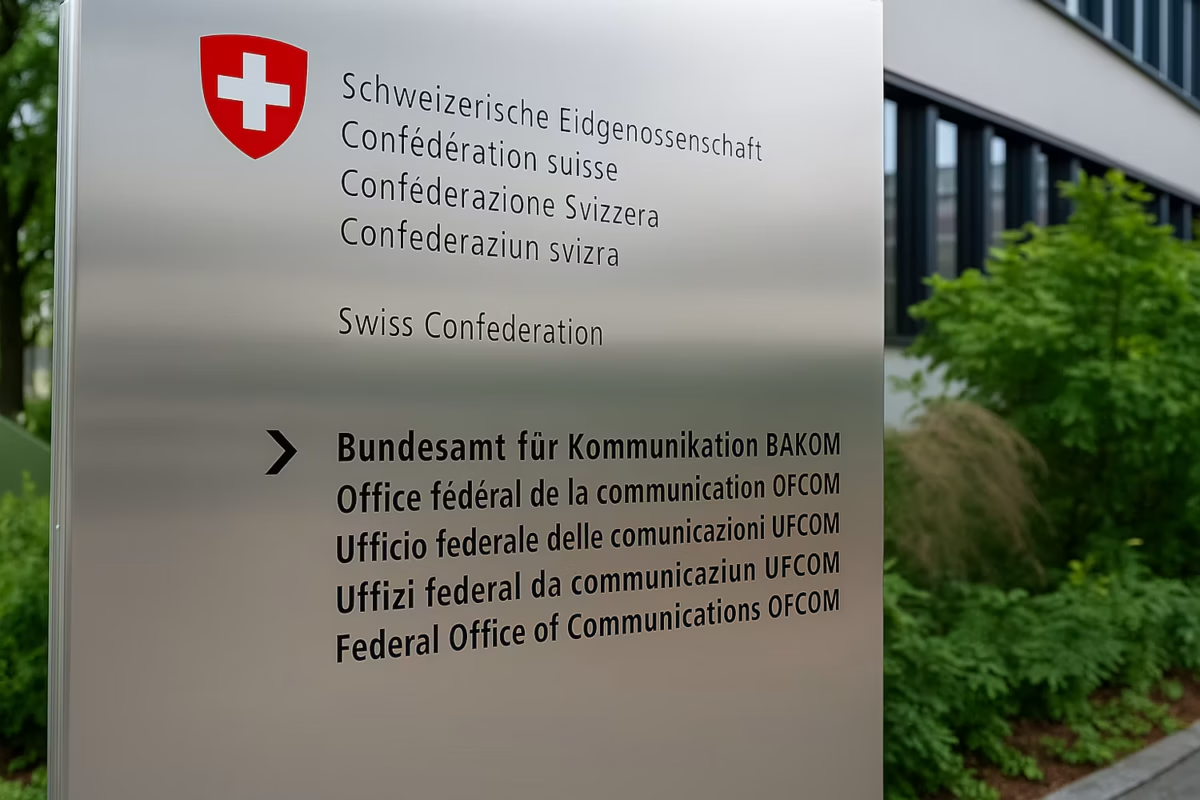
On 28 October 2026, the Federal Council took note of progress on the implementation of the Council of Europe Convention on Artificial Intelligence and published two practical outputs through the Federal Office of Communications (OFCOM): a report on sector-specific AI regulation and a “Guide on an AI Code of Conduct” for companies and associations.
The development is important because Switzerland still does not have a single horizontal AI statute comparable to the EU AI Act. Instead, the Federal Council is pursuing a two-track model: legally binding measures where necessary, combined with voluntary governance tools, sector standards and industry commitments. The legally binding part of the Swiss framework is now being prepared by the Federal Office of Justice, with consultation scheduled to begin in spring 2027.
What is the new AI Code of Conduct Guide?
OFCOM describes the new guide as a practical toolkit designed to help companies and associations develop voluntary rules for the responsible use of AI.
The guide provides model wording across ten topics, at three different levels of detail, and allows organisations to combine those elements according to their size, sector and risk profile. It also proposes a structured process for developing, implementing, reviewing and continuously improving internal AI commitments.
This is important because many organisations currently have fragmented AI practices. Employees may use generative AI tools without a formal policy. Procurement teams may acquire AI-enabled software without clear risk criteria. Business units may rely on AI-generated outputs without defined human oversight or escalation procedures.
The OFCOM toolkit is intended to help companies convert broad principles such as transparency, accountability and responsible use into actual internal rules.
For businesses, that means questions such as who may use AI, what data may be entered into external systems, when human review is required, how incidents are reported and how compliance is monitored can increasingly be addressed through a formal governance framework.
Is the guide legally binding?
No. The Federal Council explicitly classifies the guide, industry standards and voluntary commitments as non-legally binding measures. That distinction matters. A company does not become legally compliant simply because it adopts an AI Code of Conduct, and the guide does not replace existing obligations under Swiss data protection, employment, consumer, financial or sector-specific law. However, voluntary commitments should not be treated as legally irrelevant.
Once a company incorporates an AI policy into employment rules, procurement documents, customer contracts or public commitments, those statements may influence contractual expectations and internal accountability. A company should therefore avoid adopting ambitious AI commitments that it cannot actually implement.
The more useful approach is to adopt a proportionate code supported by operational measures: staff guidance, vendor controls, documented approval processes, incident escalation and periodic review.
Why Switzerland is using voluntary governance before legislation?
The Swiss approach reflects a broader regulatory philosophy. The Federal Council wants to preserve Switzerland’s position as an innovation-friendly jurisdiction while protecting fundamental rights and public trust. It has therefore decided that legislative changes should, as far as possible, remain sector-specific, with broader horizontal regulation reserved mainly for core fundamental-rights issues such as data protection.
The Council of Europe AI Convention is the principal legal reference point for the forthcoming Swiss legislation. The future Swiss rules are expected to address areas including transparency, data protection, non-discrimination, supervision and risk assessment.
The voluntary toolkit is therefore not an isolated initiative. It is part of a broader transition toward a more formal Swiss AI governance system.
What should Swiss companies do now?
Companies do not need to wait for the 2027 consultation to begin preparing. A practical first step is to create an inventory of where AI is already being used across the organisation. That includes not only dedicated AI products but also AI functionality embedded in ordinary SaaS tools, productivity software, analytics platforms and customer-service systems.
The organisation should then determine which uses create higher legal or operational risk. AI used for internal drafting is very different from AI used in recruitment, financial decisions, health-related analysis or customer-facing services.
Companies should also clarify internal responsibilities. Someone should be responsible for approving new uses, handling incidents, updating policies and reviewing vendors. For many organisations, the OFCOM toolkit provides a useful starting structure for these governance arrangements.
From AryaTech’s perspective, the practical objective is not to produce a generic “AI ethics document”. It is to create a governance framework that connects actual business use, contracts, data protection and dispute prevention.
How does the Swiss approach relate to the EU AI Act?
The relationship is important, but it should not be misunderstood. The Swiss framework is not an implementation of the EU AI Act.
The EU AI Act is a directly applicable EU regulation that creates a detailed, horizontal and risk-based legal framework governing AI systems and general-purpose AI models. It includes prohibited practices, specific obligations for high-risk AI systems, transparency rules, governance and enforcement mechanisms. Switzerland has deliberately chosen a different architecture.
Its planned framework is based primarily on the Council of Europe AI Convention, combined with sector-specific Swiss legislation and non-binding governance measures. The Federal Council has expressly stated that legislative changes should be sector-specific wherever possible, rather than creating one comprehensive regime modelled directly on the EU AI Act.
However, the EU AI Act has clearly influenced the Swiss regulatory analysis. OFCOM’s underlying regulatory studies expressly examined both the Council of Europe Convention and the EU AI Act and considered their implications for Switzerland.
The result is therefore better described as regulatory compatibility rather than regulatory copying. Both systems address similar concerns: transparency, human oversight, risk management, data governance, accountability and protection of fundamental rights. But the structure and legal scope are different.
The EU AI Act imposes detailed obligations directly on categories such as providers, deployers, importers and distributors, including certain non-EU companies where AI systems or outputs are used in the EU.
The Swiss model is expected to rely more heavily on existing sector law, general fundamental-rights protections and targeted legislative changes.
For Swiss businesses operating in the EU, this means the two frameworks may need to be applied simultaneously. A Swiss company may use the OFCOM Code of Conduct as part of its internal governance while still being directly subject to the EU AI Act if it places an AI system on the EU market or otherwise falls within the Act’s territorial scope.
In practice, companies should therefore design their Swiss AI governance systems so that they can accommodate EU AI Act requirements where necessary, without assuming that Swiss law will eventually reproduce the EU framework word for word.
That approach is likely to be more efficient than building separate governance systems for every jurisdiction.
AryaTech perspective
The Swiss AI regulatory framework is moving from general policy discussion toward practical implementation. The new OFCOM toolkit gives businesses an opportunity to establish governance structures before the binding legislation is finalised. For companies already using AI, the key question is not whether to adopt a policy merely because the government has published a guide. The more important question is whether the organisation can demonstrate that its AI use is documented, governed, contractually supported and capable of responding to legal or operational incidents. AryaTech’s can assist companies in developing tailored AI governance frameworks, employee-use rules, vendor clauses, incident procedures and compliance structures aligned with Swiss requirements while also considering EU AI Act exposure where relevant.
Official References
1. Swiss Federal Council / OFCOM — “Federal Council takes note of interim progress on AI regulation”, 28 October 2026
https://www.admin.ch/en/newnsb/s2TQiUUjrA5D
2. OFCOM — Artificial Intelligence: Regulation in Switzerland, including the Guide on an AI Code of Conduct and sector-specific measures
(https://www.bakom.admin.ch/en/artificial-intelligence)
3. Swiss Federal Council — “AI regulation: Federal Council to ratify Council of Europe Convention”, 12 February 2025
(https://www.admin.ch/en/nsb?id=104110&)
4. European Union — Regulation (EU) 2024/1689, Artificial Intelligence Act
(https://eur-lex.europa.eu/eli/reg/2024/1689?)
*This article provides general information and does not constitute legal advice.*