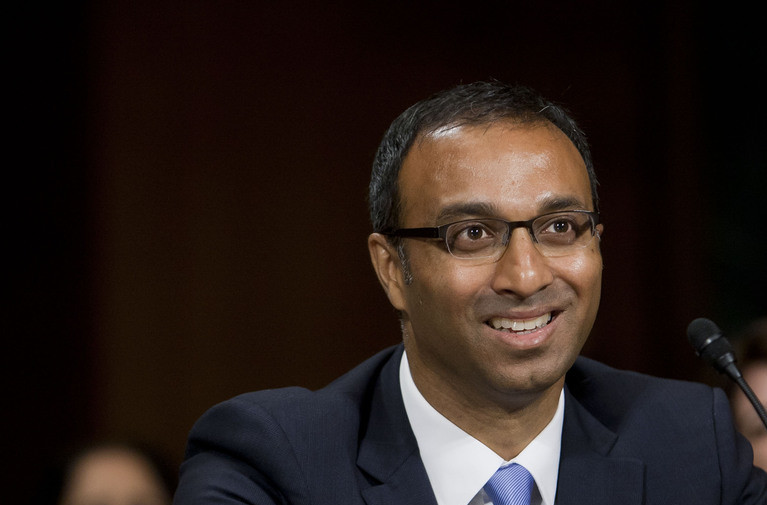
Google has lost, for now, its attempt to freeze the most commercially sensitive parts of the remedies imposed in the U.S. search monopolisation case. In an order dated 7 May 2026, U.S. District Judge Amit Mehta denied without prejudice Google’s motion for a partial stay pending appeal. That matters because the Final Judgment had already become effective on 3 February 2026, meaning the remedies framework remains live even though the appeal and cross-appeals are now underway.
The background to the dispute
This latest ruling sits on top of two earlier milestones. First, in August 2024, Judge Mehta held that Google had unlawfully maintained monopolies in the markets for general search services and general search text ads, in violation of Section 2 of the Sherman Act. Secondly, in September 2025, he declined to impose the most aggressive structural remedies sought by the DOJ and the states, but still ordered a substantial package of behavioural and access remedies designed to open the market. Those remedies were then embodied in the Final Judgment entered on 5 December 2025.
The 2025 remedies decision was deliberately a middle course. Mehta rejected forced divestiture of Chrome and a contingent Android break-up, and he also declined to ban Google outright from making payments for distribution. At the same time, he barred Google from maintaining or entering into certain exclusive distribution arrangements for Search, Chrome, Google Assistant and Gemini, established a Technical Committee to help implement and supervise compliance, and set the judgment period at six years, with the judgment taking effect 60 days after entry.
What the judgment actually requires
The headlines about “Google being forced to share data” are directionally right, but the actual order is more tailored than that shorthand suggests. The Final Judgment requires Google, at marginal cost, to provide Qualified Competitors with specified portions of its web search index, including document identifiers, URL mappings, crawl timing and certain metadata, and to provide certain user-side datasets used in Google’s GLUE and RankEmbed models. Critically, the judgment also says those disclosures do not require Google to hand over algorithms, ranking signals or post-trained LLMs, and it requires privacy and security safeguards to be developed before user-side data is shared.
The judgment also goes beyond raw data access. It obliges Google to offer a search syndication licence to Qualified Competitors on terms no worse than those offered to other users of Google’s syndication products, including real-time API access to ranked organic search results and certain user-facing search features. It separately requires a search text ads syndication licence on similarly non-discriminatory terms. Those syndication remedies are not open-ended: the order caps a Qualified Competitor’s use of Google’s search syndication services at 40% of annual U.S. queries in year one, with that cap tapering over five years to push rivals towards building independent capabilities.
Another important point is that the potential beneficiaries are not limited to legacy search engines. The Final Judgment defines a “Competitor” broadly enough to include a provider of, or potential entrant into, a GenAI product in the United States, and it defines “Search Access Points” to include GenAI products that can retrieve and display information from a general search engine. But that does not mean every AI company gets automatic access. To become a “Qualified Competitor”, an applicant must satisfy approved security standards, accept audits, show a real plan to invest and compete in the relevant markets, and not pose a U.S. national security risk.
Why the stay failed
Google’s stay motion was directed only at the disclosure and syndication portions of the judgment. In January, it argued that complying with those provisions while the appeal was pending could expose confidential information and trade secrets in a way that could not be undone if Google later won on appeal. Judge Mehta accepted that disclosure concerns can be serious, but he held that a stay pending appeal is extraordinary relief governed by the familiar four-factor test, and that irreparable harm is a necessary prerequisite.
On that point, Google came up short. Mehta noted that, as of 7 May, the Technical Committee was not yet fully staffed, key licence templates had not yet been developed, Qualified Competitors had not yet been comprehensively identified, and privacy safeguards for sharing user-side data had not yet been settled. Plaintiffs told the court that rivals might be able to realise the benefits of the judgment only by late autumn or early winter 2026, at the earliest. In those circumstances, the judge held that the alleged harms were not sufficiently imminent and remained too speculative to justify a stay now.
The line that has attracted the most attention is Mehta’s rejection of Google’s attempt to turn disclosure into an automatic stay trigger. He said there is no rule in the D.C. Circuit that any disclosure of information is, by itself, irreparable harm sufficient to warrant a stay, and no per se antitrust rule that disclosure to competitors automatically justifies one either. In his view, the “context of the dissemination” matters: who the recipients are, how they would use the information, what safeguards apply, and what the licence terms actually say. That is why he denied the motion without prejudice rather than finally rejecting Google’s argument on the merits.
To soften the practical impact of that ruling, Mehta also required the plaintiffs to give Google and the court 45 days’ notice before any certified Qualified Competitor can begin using a data-sharing or syndication remedy. That gives Google a procedural runway to renew its stay request once the implementation details are concrete, rather than hypothetical.
The brief legal analysis
Legally, this is an important decision, but it is not yet the final word on the most controversial parts of the remedies package. The order is best understood as a ripeness and irreparable-harm ruling, not as a definitive endorsement of whatever data-sharing regime the Technical Committee and plaintiffs eventually assemble. The court is effectively saying: come back when the actual contours of the disclosure are known. That is a meaningful distinction, because it preserves Google’s ability to press a much sharper trade secrets, privacy and overbreadth case later.
At the same time, the underlying judgment remains striking because it reflects a distinctly modern view of antitrust remediation in digital markets. Mehta refused to break Google up, but he was willing to impose access, interoperability and contracting constraints to “pry open” a closed market. That approach is unusually relevant in platform and AI cases, where competitive bottlenecks often come less from ownership of a single asset than from control over distribution, data and feedback loops. The structure of this decree shows that the court was trying to deny Google the fruits of its unlawful conduct without turning the case into a full-scale judicial redesign of the company.
The most interesting appellate fault-line is likely to be the decree’s treatment of GenAI firms. Google’s opening brief in the D.C. Circuit argues that the remedies improperly grant rivals benefits they would never have enjoyed absent Google’s conduct and that GenAI companies, in particular, are outside the core market in which Google was found to possess monopoly power. That argument is not frivolous. Yet Mehta’s remedies opinion expressly stated that the emergence of GenAI changed the course of the case, and that the remedies phase had become as much about preventing Google’s search dominance from carrying over into AI as about reviving competition among general search engines. In other words, the appeal will likely test how far a court can go in using antitrust remedies to prevent monopoly spillover into an adjacent, rapidly converging market.
References:
- https://www.reuters.com/sustainability/boards-policy-regulation/google-asks-us-judge-defer-order-forcing-it-share-data-while-it-appeals-2026-01-16/?utm_source=chatgpt.com
- https://www.reuters.com/technology/what-comes-next-googles-antitrust-case-over-search-2025-09-02/?utm_source=chatgpt.com
- https://www.law.com/nationallawjournal/2026/05/08/antitrust-remedies-order-takes-effect-as-us-judge-denies-googles-stay-motion/
- https://courthousenews.com/google-urges-dc-circuit-to-overturn-search-monopoly-remedies/
- https://www.vitallaw.com/news/antitrust-d-d-c-google-denied-pause-on-core-search-monopoly-remedies/ald01e78a1e9c5c0642f1b976125dd40d4801?refURL=https%3A%2F%2Fwww.google.com%2F#.